
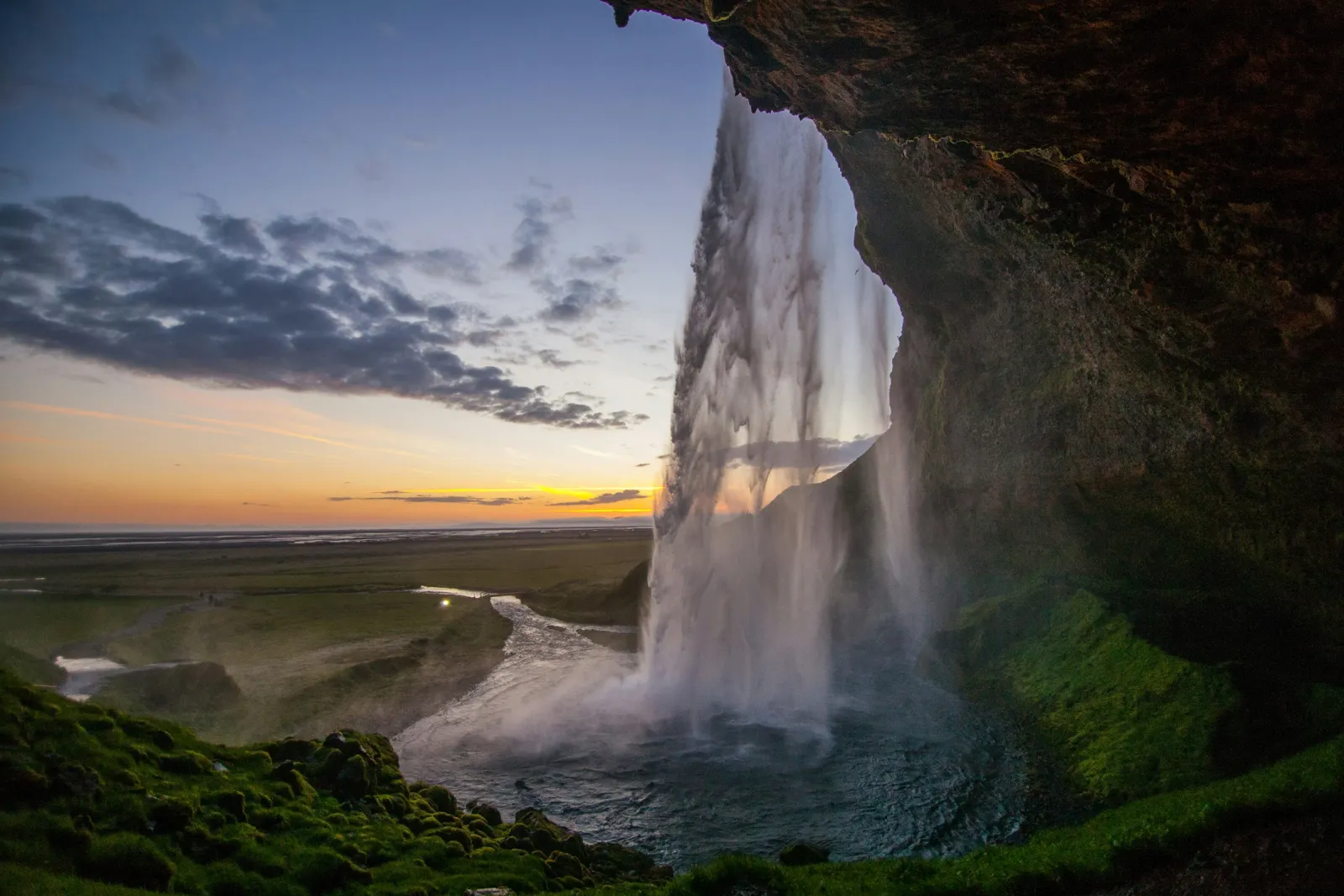
The South Coast is Iceland's other classic day out from Reykjavík: waterfalls falling from old sea cliffs, a headland with a natural arch, and a black sand beach below basalt columns. Vík, the village at the far end of the usual day, is 186 km from Reykjavík on paved roads, a little under three hours' driving each way before stops. That is why most South Coast days last around ten hours.
Seljalandsfoss and Gljúfrabúi
About two hours from the city, Seljalandsfoss drops about 60 metres from an old sea cliff, and a path runs behind the water. In winter that path can be closed when ice makes it dangerous, and the spray soaks everyone who takes it, so a waterproof jacket earns its place here. At the time of writing, parking costs 900 ISK per car, paid on site or through Checkit.
A short walk along the cliffs, Gljúfrabúi falls 40 metres into a narrow gorge, mostly hidden behind a rock. You can reach it by wading the stream into the canyon; watch for falling rocks.
Skógafoss
About half an hour further east, Skógafoss is about 60 metres high and 25 metres wide, and has been protected as a natural monument since 1987. A steep staircase of more than 400 steps leads to a viewing platform at the top, where a path continues up the river. That path is the start of the long Fimmvörðuháls trek to Þórsmörk, so on a day trip, turn back at the viewpoints.
Dyrhólaey
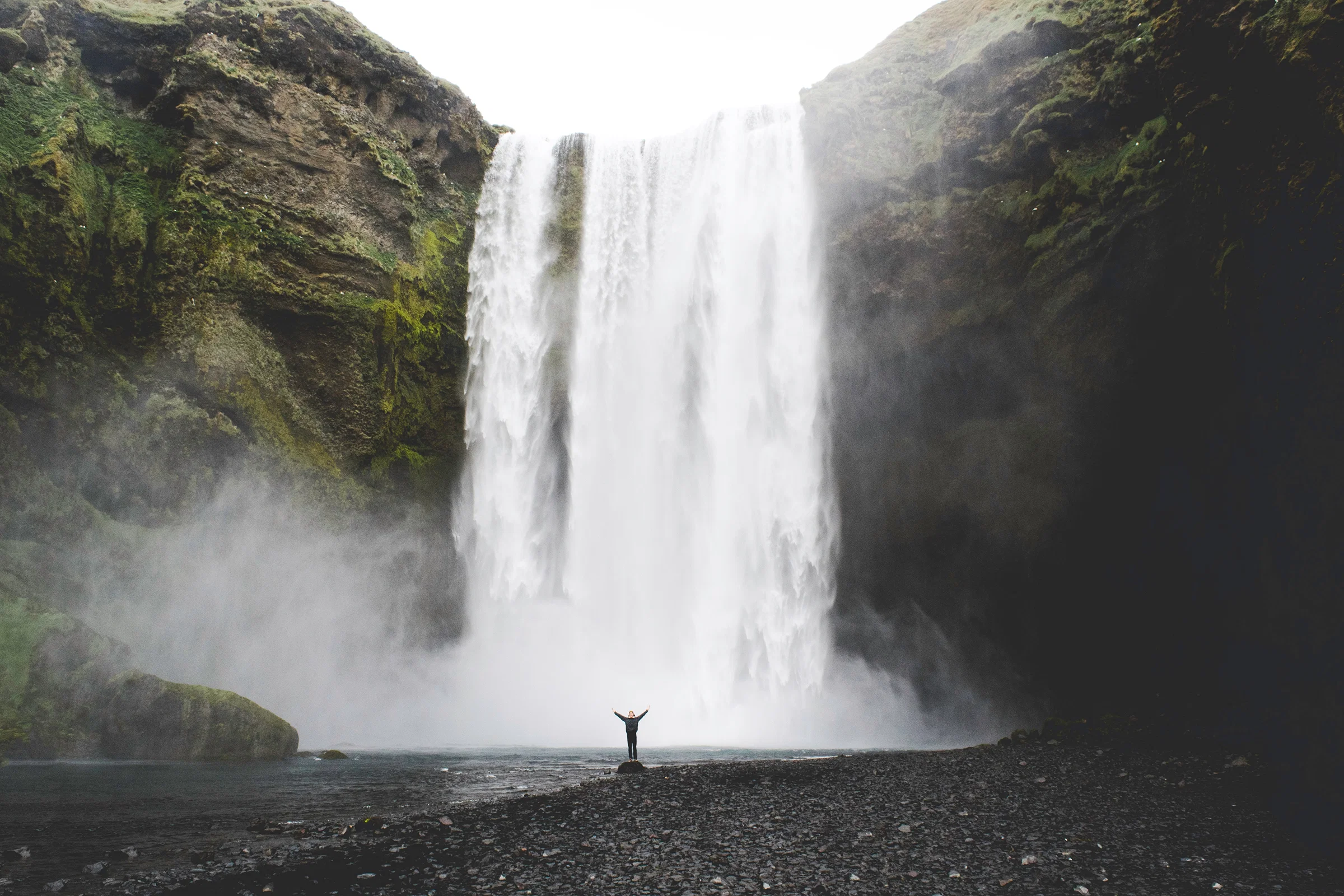
Dyrhólaey is a promontory about 120 metres high, named for the great arch in the sea below it: the name means the hill with the door-hole. The lower viewpoint looks along the coast towards the black beach and the sea stacks off Vík. The road to the upper area is steep and narrow and is often closed in winter, and access can be restricted from 1 May to 25 June to protect nesting birds. In 2026 the headland closed overnight during that period.
Reynisfjara and Vík
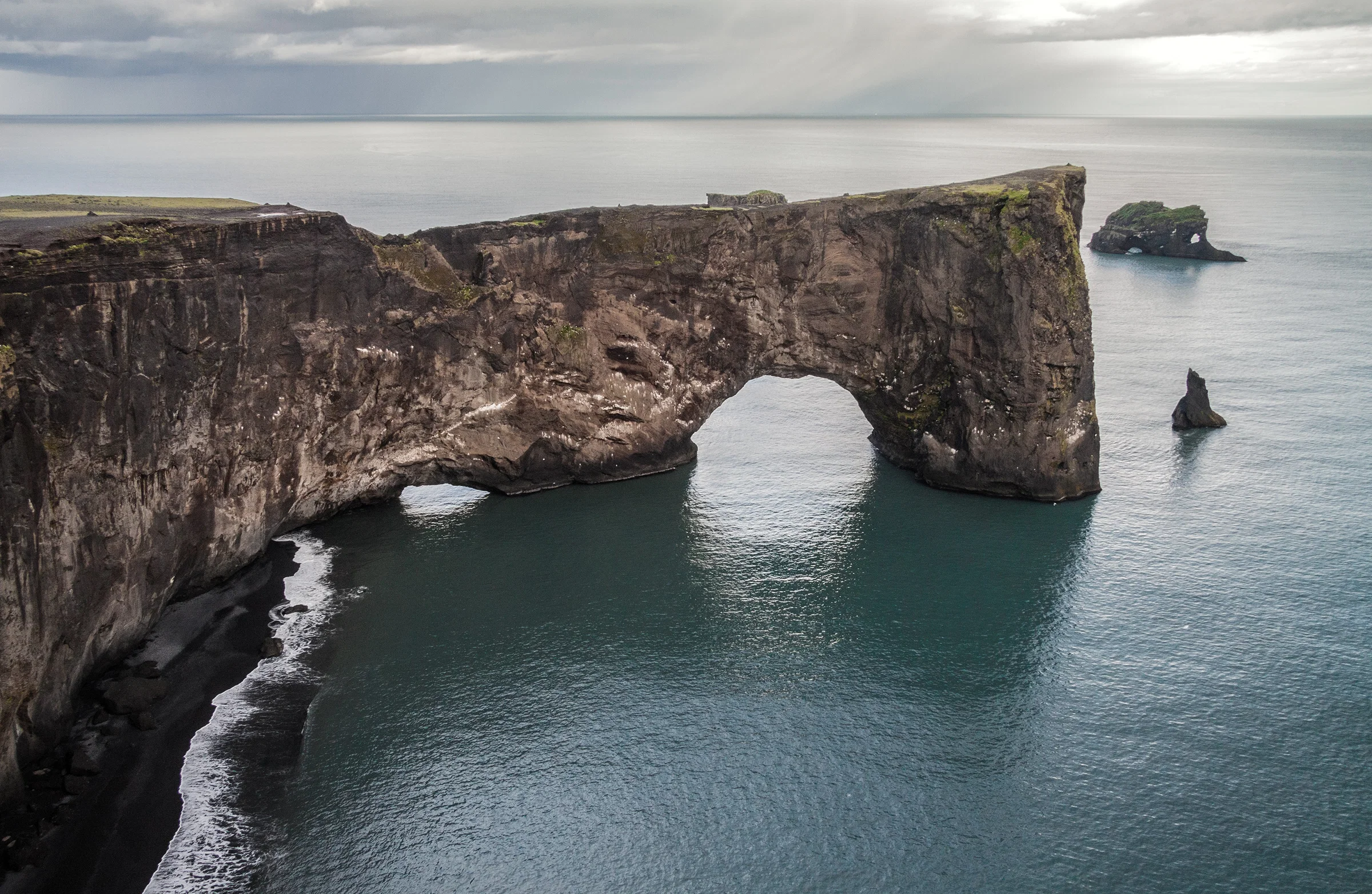
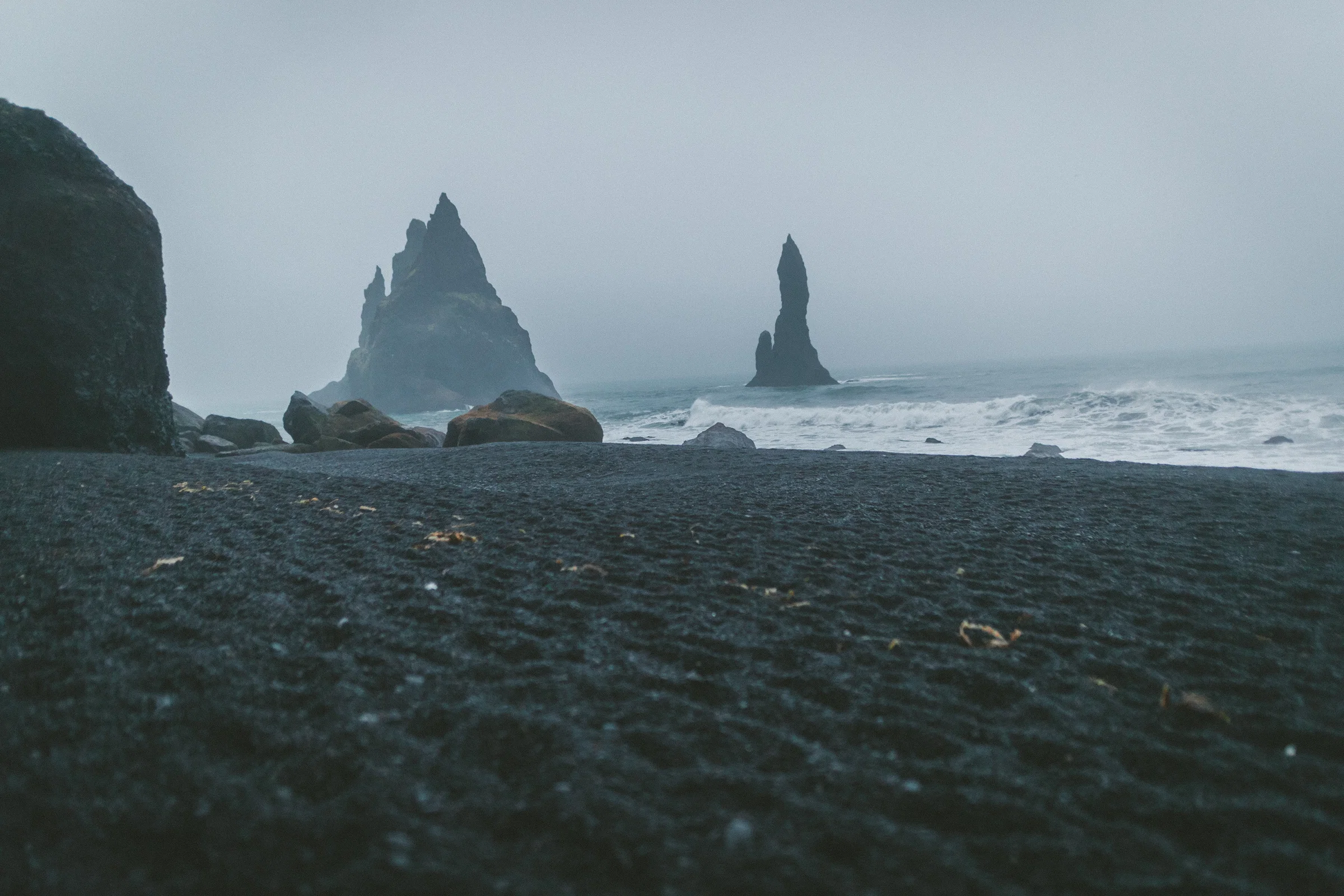
Reynisfjara is the black beach below Mount Reynisfjall, with basalt columns at the foot of the cliff and the Reynisdrangar sea stacks offshore. It is also the most dangerous place on the day. Sneaker waves arrive without warning after a long run of small ones, surge far higher up the beach than the waves before them, and can sweep an adult out to sea in seconds. Lives have been lost here.
Warning lights at the entrance show the risk when they are working. Yellow means stay alert. Orange means keep at least 25 metres from the sea. Red means the beach is closed and you watch from the viewing area; since August 2025 a red light also closes the way down to the basalt columns and the Hálsanefshellir cave. Whatever the light: stay above the wet sand, never turn your back on the sea, and keep children by the hand. Storms in early 2026 damaged the viewing platform, put the warning lights out of action and changed the beach, so check the current situation and the wave forecast on SafeTravel before you go.
Vík, the southernmost village in Iceland, is a short drive further on, and is the usual place to eat before the drive back.
Further East: Jökulsárlón
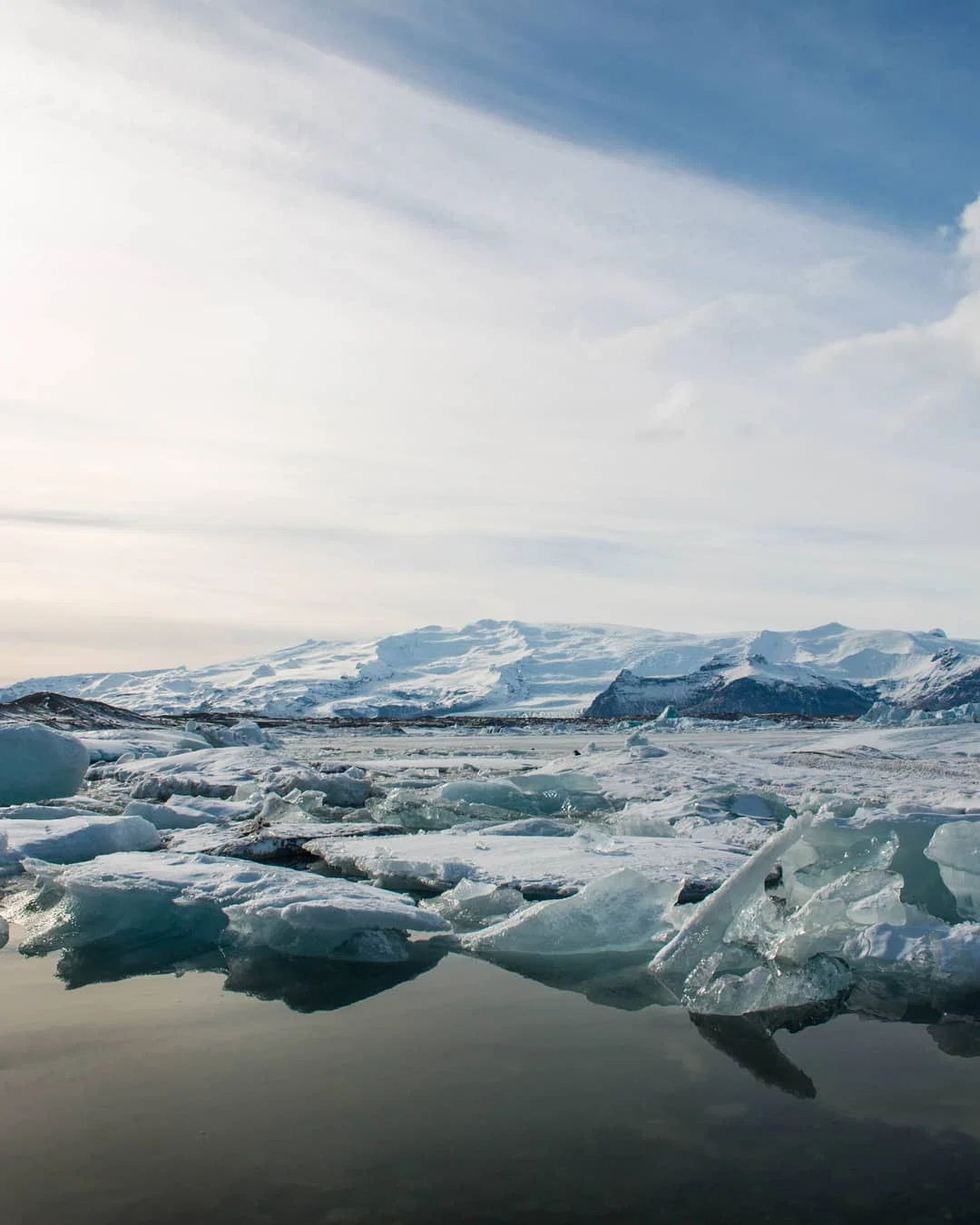
The glacier lagoon Jökulsárlón, where icebergs from Breiðamerkurjökull drift towards the sea, is 379 km from Reykjavík, more than five hours' driving each way. Across the road from the lagoon is Diamond Beach, where the ice washes up on the black sand. It is possible in one very long day, and our 14-hour private tour goes as far as Diamond Beach, but most of the day is spent in the car and the stops are short. Never step onto the floating ice: it can roll over or break apart without warning. At the time of writing, parking at the lagoon costs 1,110 ISK per car.
Planning the Day
In summer the light lasts late into the evening. Around the winter solstice there are only about four hours of daylight, so a winter South Coast day starts and ends in the dark, and the upper road at Dyrhólaey and the path behind Seljalandsfoss may be closed.
If you drive yourself, check the road conditions on umferdin.is (or call 1777), the weather and warnings on en.vedur.is, and the alerts on SafeTravel before you leave. Keep your headlights on, keep to the 90 km/h limit on paved rural roads and go slower in poor conditions, and never stop on the road for a photograph. The emergency number is 112.
On a private tour your guide drives, reads the conditions at each stop, and knows where the beach is safe on the day.
 Tour in This StoryPrivate South Coast Tour
- 10 hours
- Private tour
- Pickup offered
