
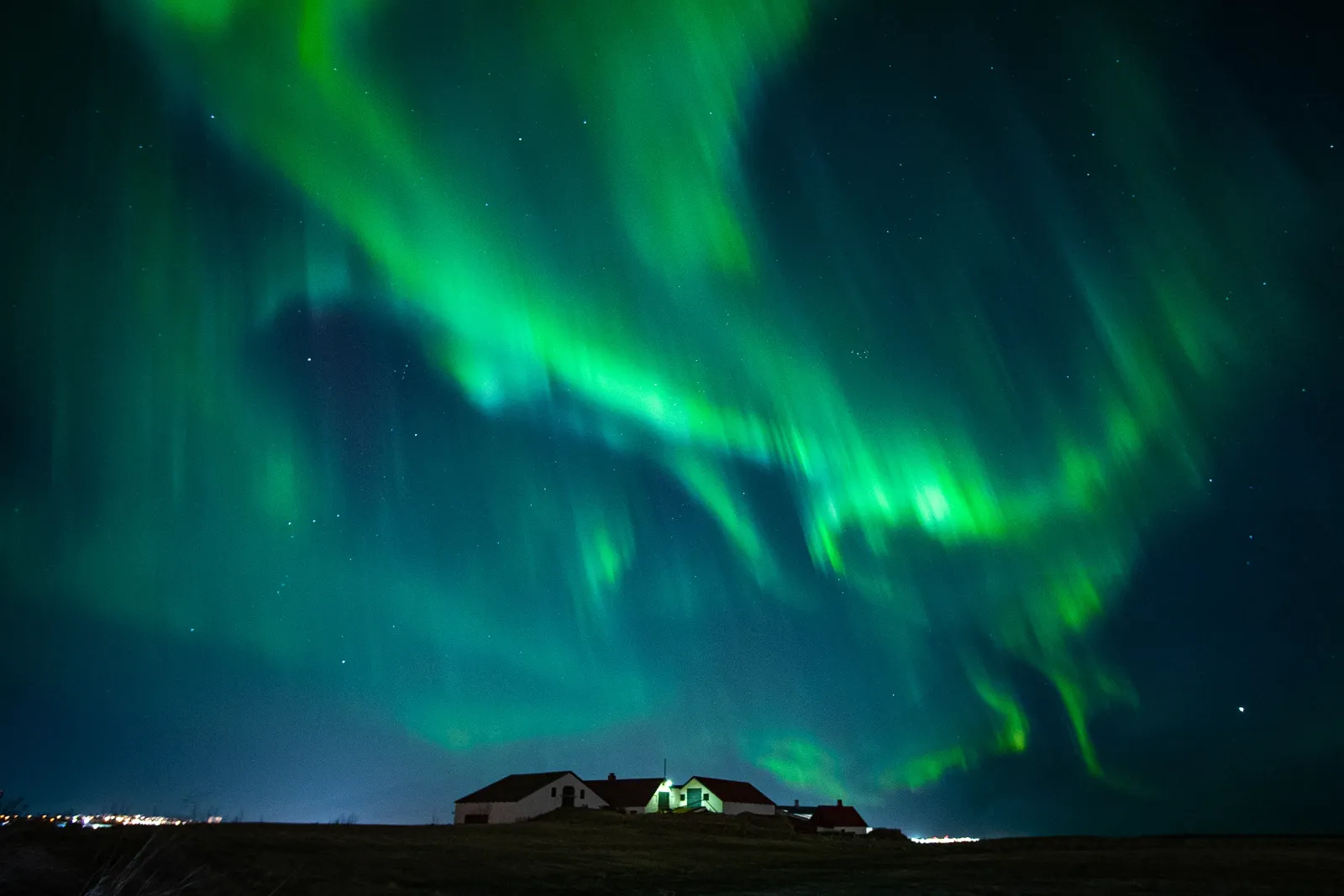
The northern lights are in the sky over Iceland all year round, but you can only see them when it is dark. Seeing them takes three things at once: a dark sky, a gap in the cloud, and enough activity from the sun. Nobody can promise all three on a given night, so the best plan is to understand what decides a night, and to give yourself more than one.
When to Come
The season runs from September to April, when the nights are long enough. In summer the nights are too bright. The weeks around the equinoxes in September and March are often said to be the most active, while midwinter simply gives you the longest window each night.
There is no fixed hour. The aurora can appear any time it is properly dark, and it is often strongest somewhere around the middle of the night, so plan evenings that can run late.
What Decides the Night
The single most useful page is the aurora forecast of the Icelandic Met Office. Most of it is a cloud forecast: a map of Iceland, hour by hour for several days, where green is cloud and white is clear sky. In the corner is an aurora activity figure for midnight on a scale of 0 to 9, along with the times of sunset, darkness and moonrise in Reykjavík.
Read the two together. Activity tells you whether the sky may put on a show; the cloud map tells you whether you will be able to see it, and where to go for a clear patch. A bright moon also washes out a faint display, and so do city lights: on a good night you can see the aurora from Reykjavík, but a faint one is easier to see away from the city.
Where the Sun Is Now
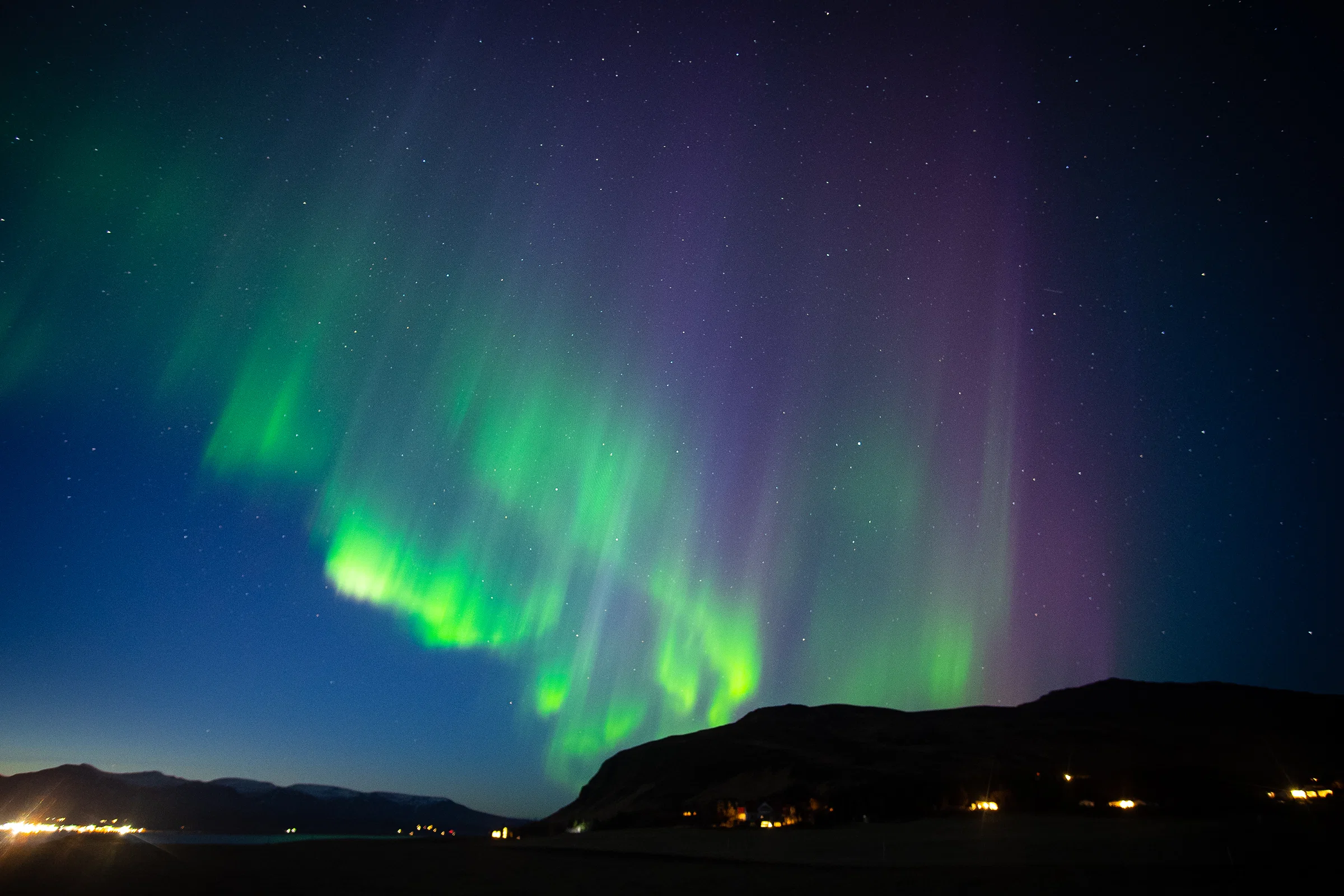
The sun's activity rises and falls over a cycle of about eleven years. The current cycle, Solar Cycle 25, peaked in late 2024 and is now on its way down. That does not decide any single night: a strong display depends on individual eruptions from the sun, which can still happen in a declining year. Treat any claim that "this winter will be the best in years" as marketing.
Give Yourself Several Nights
Because the cloud changes from night to night, the most reliable way to improve your chances is time. Plan the aurora for more than one evening of your trip, keep the first few nights of your trip free, and check the forecast each afternoon.
If You Go Looking by Car
Driving out of the city at night is the part to take seriously. Check the weather and the road conditions before you leave, keep your headlights on, and do not drive tired. Above all, never stop on the road or on its shoulder to look up or take a photograph; find a proper parking place first. The emergency number is 112.
What to Wear
You will be standing still outside, often for a long time, so dress for the cold rather than for the walk. SafeTravel's advice works well here: a base layer of wool or synthetic fabric (not cotton), a warm middle layer of wool or fleece, a windproof and waterproof outer layer, a warm hat and gloves, and warm, waterproof shoes with wool socks.
Taking Pictures
A phone will record a strong display, but for fainter ones a camera on a tripod makes the difference. As a starting point, Visit Iceland suggests ISO between 800 and 3200, an aperture between f/2.8 and f/5.6, and exposures of 15 to 30 seconds, with the focus set manually to infinity and a self-timer so that pressing the button does not shake the camera. Practise at home, because changing settings with cold fingers in the dark is hard.
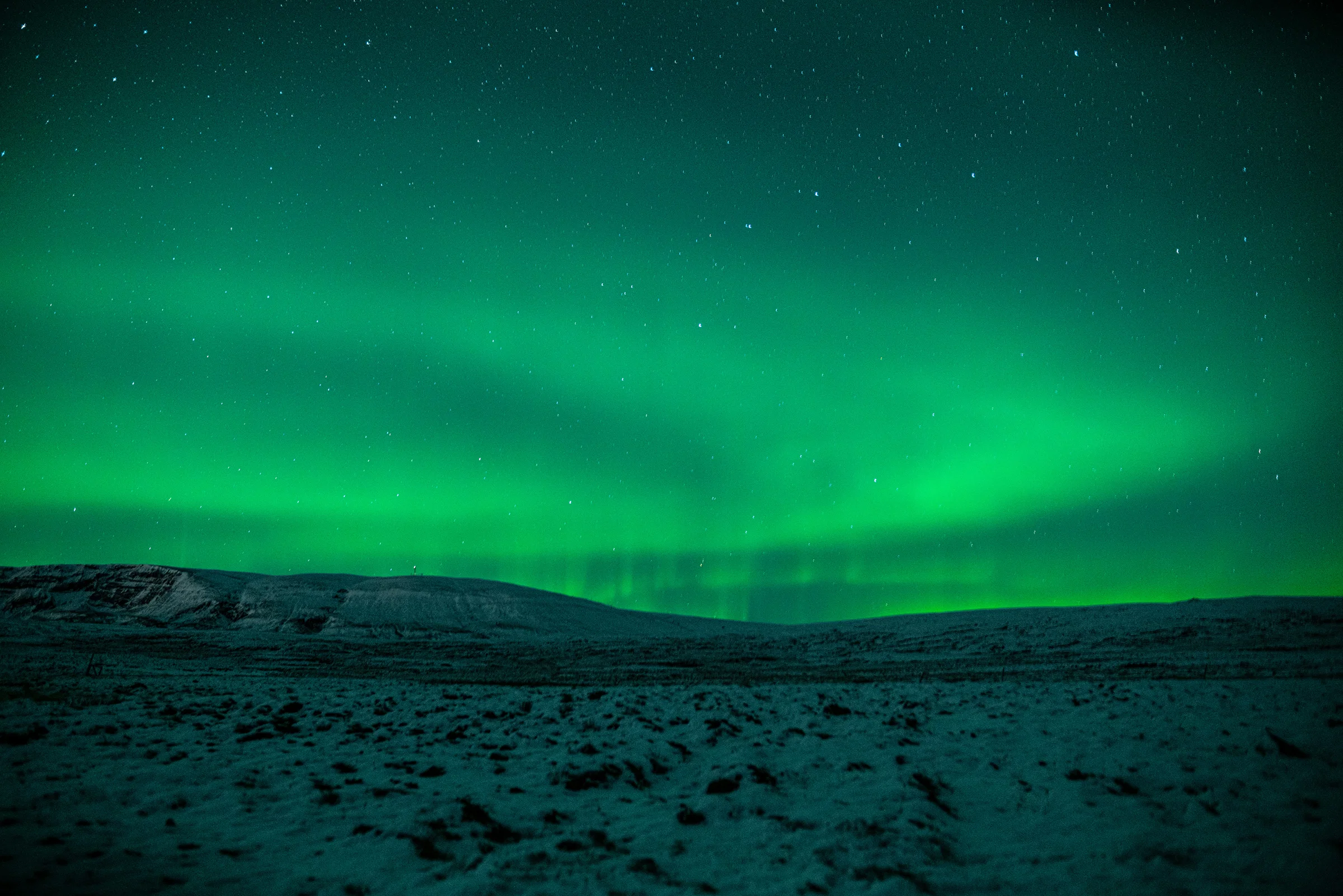
Do not be disappointed if the sky looks paler than the photographs. A camera gathers light for many seconds, and a faint aurora can show clearly on a screen before it is obvious to the eye.
What a Tour Adds
On our tours the guide chooses where to go on the night itself, from the cloud forecast and the activity, somewhere outside the city away from light pollution, and decides by 5 pm whether the conditions are good enough to go at all. There are hot drinks and blankets, and the guide photographs you with the lights. If a group tour turns out to be only stargazing and hot chocolate, you can come again for free: the ticket stays valid for two years after purchase.
We also run the tour on Christmas Eve, Christmas Day, New Year's Eve and New Year's Day, and a private tour for just your own party.
 Tour in This StorySpirit of the Aurora
- 5 hours
- Winter only
- Pickup included
